

On this page
- Step 1: Know your feed and your target
- Step 2: Match feed form to dryer family
- Step 3: Direct or indirect heating
- Worked example: how much water must be evaporated?
- Step 4: Operating cost and footprint
- Step 5: Environmental and safety
- Step 6: Test before you buy
- What I hear from owners
- Selection checklist
- Worked example: fuel and power cost of two dryer choices
- Numbers to ask every dryer supplier for
- Go deeper: the full guide series
- Frequently asked questions
- What is the most energy-efficient dryer?
- Spray dryer or drum dryer?
- Can one dryer handle several products?
- How is final moisture controlled?
- What does “wet basis” mean?
- Sources and further reading
- Related guides
- More on Industrial Dryers
Short answer: choose an industrial dryer by what you are drying first, and how much water you must remove second. The physical form of the feed (liquid, slurry, paste, cake, granules), its heat sensitivity and its stickiness narrow the choice to two or three dryer types. Energy cost and floor space decide between those.
In my factory visits, dryer selection is one of the decisions owners worry about most, because it is expensive and hard to undo. I often hear that a dryer was bought “because the neighbour has one”. The same dryer that runs well on one product can fail completely on another that looks similar. The honest route is to start from your own product and ask for a trial.
Step 1: Know your feed and your target
- Feed form: clear liquid, slurry, paste, filter cake, wet powder, granules, lumps.
- Moisture in and out: usually on a wet basis. Know both.
- Heat sensitivity: the maximum product temperature before colour, nutrition or activity is lost.
- Stickiness and fouling: does it glue to walls in a certain moisture range?
- Particle size and final product needs: free-flowing powder, granules, flakes, a certain bulk density.
- Hazards: flammable solvent, dust explosion, toxicity, odour.
- Capacity and hours: continuous or batch.
Step 2: Match feed form to dryer family
| Feed | Common dryer choices |
|---|---|
| Liquid or slurry to powder | Spray dryer, drum dryer, agitated thin film dryer |
| Paste or filter cake | Paddle dryer, flash dryer (with back-mixing), vacuum dryer, tray dryer |
| Wet granules or crystals | Fluid bed dryer, rotary dryer, tunnel dryer |
| Bulk lumps, minerals | Rotary dryer; see rotary drum dryer |
| Heat-sensitive, high-value products | Vacuum dryer, freeze dryer, low-temperature fluid bed |
| Sludge | Paddle dryer or other indirect dryer; see paddle dryer guide |
Step 3: Direct or indirect heating
In a direct dryer, hot gas touches the product. Heat transfer is fast and equipment is simple, but there is a large volume of exhaust gas to clean, and the product is in contact with the gas. In an indirect dryer, a hot surface heats the product through a wall, so exhaust volume is small, solvents can be recovered and dust losses are low, but the heated surface can foul. Pick indirect for solvent recovery, toxic or odorous products, or low gas volume. Pick direct when the product is robust and throughput is high.
Worked example: how much water must be evaporated?
A plant has 1,000 kg/h of wet feed at 60% moisture (wet basis) and wants a product at 5% moisture.
- Dry solids: 1,000 × (1 − 0.60) = 400 kg/h
- Product at 5% moisture: 400 / 0.95 = 421 kg/h
- Water to evaporate: 1,000 − 421 = 579 kg/h
The latent heat of water is about 2,400 kJ/kg at typical drying temperatures, so the minimum thermal duty is about 579 × 2,400 = 1.39 GJ/h, or 386 kW. Real dryers use more. If the dryer has an overall thermal efficiency of about 50%, as some direct dryers do, the heat input is nearer 770 kW. Efficiency varies widely between dryer types and operating conditions, so ask each supplier for their figure at your duty. Our dryer heat load calculator lets you try different assumptions.
Step 4: Operating cost and footprint
Fuel is usually the largest running cost. Compare heat per kg of water evaporated, power for fans and drives, labour, and maintenance. Consider heat recovery from exhaust, and the fuel available on your site: gas, thermal oil, steam, electricity or biomass. A cheaper dryer using a more costly fuel can lose over several years.
Step 5: Environmental and safety
Plan for dust collection, exhaust cleaning, noise, and fire or explosion risk. Dryers handling organic powders can have dust explosion risk, and solvent dryers need inert atmosphere or explosion-rated design. See our environmental compliance guide for the regulatory side.
Step 6: Test before you buy
Ask the supplier for a trial on your product at their test centre. Take back samples, results on residence time, product temperature, final moisture, and bulk density, and look at what the product does on the wall. For feed that changes by season or batch, test the worst case, not the average.
What I hear from owners
- “It dried fine on the lab tray, so a big dryer will be fine.” Scale-up from a tray is not reliable. Stickiness and agglomeration show only at scale.
- “The dryer cannot reach the moisture.” Often the feed moisture went up after upstream filtration changed.
- Energy bills surprise owners more than the machine price.
- Cleaning time in food and pharma lines matters as much as drying time. Ask how the dryer is cleaned.
Selection checklist
- Document feed form, moisture in and out, temperature limit and hazards.
- Calculate water to be evaporated.
- Shortlist two or three dryer types from the table.
- Request offers with efficiency, fuel use, exhaust volume and cleaning method.
- Run trials on your worst-case feed.
- Compare total cost over five to ten years, using the RFQ builder to keep the enquiries uniform.
Worked example: fuel and power cost of two dryer choices
Step 4 says that fuel is usually the largest running cost. The comparison below puts two very different dryers on the same basis: cost per hour to evaporate the same water. All consumption figures, prices and the capital difference are assumed for illustration; real figures come from supplier guarantees and trials on your feed.
Assumed duty: 1,000 kg of water evaporated per hour, 6,000 hours a year.
See it in 3D
- Dryer A, direct-fired convective dryer on piped natural gas: 4,200 kJ per kg of water, so 1,000 × 4,200 = 4.2 GJ/h. Gas at 35 MJ per scm: 4,200 ÷ 35 = 120 scm/h. At ₹55 per scm: ₹6,600/h. Fans 75 kW at ₹8 per kWh: ₹600/h. Total ₹7,200/h.
- Dryer B, indirect steam-heated dryer, steam from an existing biomass boiler: 1.3 kg of steam per kg of water, so 1,300 kg/h. Steam at ₹2.5 per kg: ₹3,250/h. Drive and fan 45 kW: ₹360/h. Total ₹3,610/h.
- Annual cost: A = 7,200 × 6,000 = ₹4.32 crore; B = 3,610 × 6,000 = ₹2.17 crore. Difference about ₹2.15 crore a year.
- Payback on an assumed ₹1.5 crore higher price for B: 1.5 ÷ 2.15 = 0.7 years.
| Item (illustrative) | Dryer A: direct, gas | Dryer B: indirect, steam |
|---|---|---|
| Heat input per hour | 4.2 GJ (120 scm gas) | 1,300 kg steam |
| Energy cost per hour | ₹6,600 | ₹3,250 |
| Power cost per hour | ₹600 | ₹360 |
| Total per year | ₹4.32 crore | ₹2.17 crore |
This does not mean indirect dryers always win. The result depends heavily on cheap steam being available; with steam from a new oil-fired boiler, the gap could close or reverse. Dryer B also has to suit the product: an indirect dryer handles pastes and solvents well but may not give the particle form a spray or flash dryer gives. Use a table like this to compare shortlisted designs once Steps 1 to 3 have ruled out the ones that cannot make your product.
Numbers to ask every dryer supplier for
- Guaranteed evaporation rate at stated inlet and outlet moisture
- Heat consumption per kg of water, and the basis used
- Installed and running power of fans, drives and auxiliaries
- Exhaust temperature and humidity, and any heat recovery offered
- Expected cleaning frequency and downtime
- Trial or reference data on a similar product
Go deeper: the full guide series
These guides cover choosing, sizing, running and buying dryers, with worked calculations.
- Dryer Selection for Twelve Common Products in One Table
- Drying Curves Explained: Constant Rate, Falling Rate and What They Mean for Sizing
- Dryer Energy Audit: Where the Heat Actually Goes
- Measuring Moisture: Loss on Drying, Karl Fischer and IR Balances
- Spray Dryer Powder Sticking to the Wall: Causes and Fixes
- Spray Dryer Particle Size: Atomizer Speed, Feed Solids and Temperature
- Rotary Dryer Troubleshooting: Lumps, Carryover and Uneven Moisture
- Fluid Bed Dryer Channeling and Dead Zones
- Flash Dryer Sizing: From Residence Time to Duct Length
- Sludge Dryers Compared: Paddle, Disc and Thin Film
- Dust Explosion Risk in Dryers: Kst and Pmax in Plain Terms
- Heat Recovery From Dryer Exhaust: Options and Typical Paybacks
- Cyclone and Bag Filter Problems After a Dryer
- Heat Pump Dryers Versus Hot Air Dryers: Cost and Limits
- Dewatering Before Drying: How Much Evaporation Load You Remove
- Dryer Factory Acceptance Test: What to Witness
- Freeze Drying for Industrial Buyers: Cycle, Cost and Equipment
- Drying Pharmaceutical Powders: Temperature Limits and GMP Points
- Dryer Commissioning Checklist
Free tools for this topic: Dryer selection tool · Dryer evaporation, heat and fuel calculator · Free RFQ and datasheet builder · all free engineering tools
Frequently asked questions
What is the most energy-efficient dryer?
It depends on the product. Indirect and vacuum dryers often use less energy per kilogram of water than direct hot-air dryers, but not always. Ask for measured data.
Spray dryer or drum dryer?
Spray dryers make free-flowing, uniform powder from liquid feed with short heat exposure. Drum dryers give flakes and cost less but expose product to higher surface temperatures.
Can one dryer handle several products?
Sometimes. Fluid bed, tray and paddle dryers are fairly flexible. Check cleaning between products and the full range of feed properties.
How is final moisture controlled?
By residence time and temperature, with online moisture measurement or regular lab testing, and by controlling the feed moisture.
What does “wet basis” mean?
Moisture as a percentage of total wet weight. Dry basis is moisture as a percentage of dry solids. Always state which basis is used when you compare offers.
General engineering information. Final selection needs product trials and a qualified supplier’s design.
Sources and further reading
For standards, data and independent guidance on this topic, see NFPA (combustible dust and fire safety standards), US Chemical Safety Board (dust explosion investigation reports), IECEx (hazardous area equipment certification) and ACGIH (the Industrial Ventilation Manual and exposure limits). Always check the current edition and your site conditions before applying any figure.
Free tool for this topic
Industrial Dryer Evaporation, Heat & Fuel CalculatorWater evaporation, product output, heat load and fuel or steam consumption for spray, rotary, flash, fluid-bed and paddle dryers.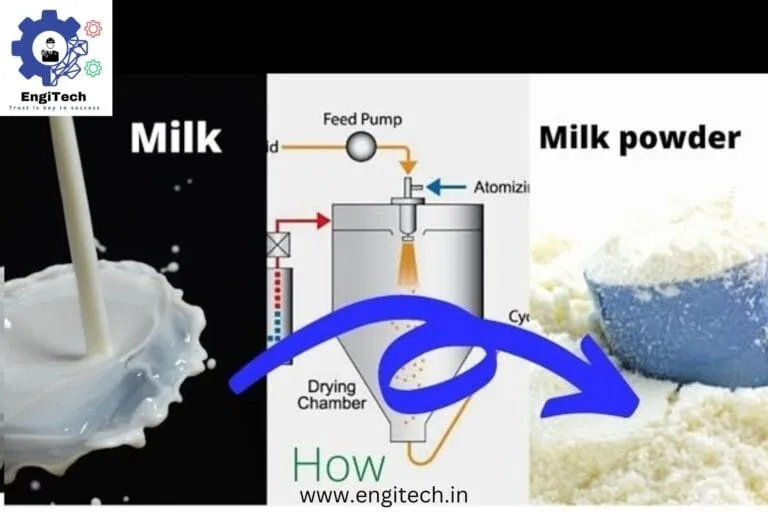 Industrial DryersSpray Drying of Milk: Process & Benefits Explained
 Industrial DryersComprehensive Guide to Sludge Dryer Manufacturers
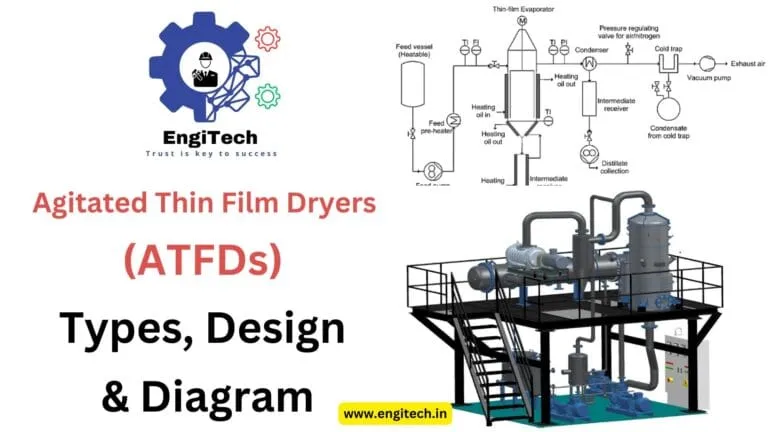 Industrial DryersATFD Design Guide: Rotor Speed, Blade Clearances & Zero Liquid Discharge (ZLD)
 Industrial DryersAdvancements in Laser-Based Drying Technologies: Shaping the Future of Industrial Efficiency
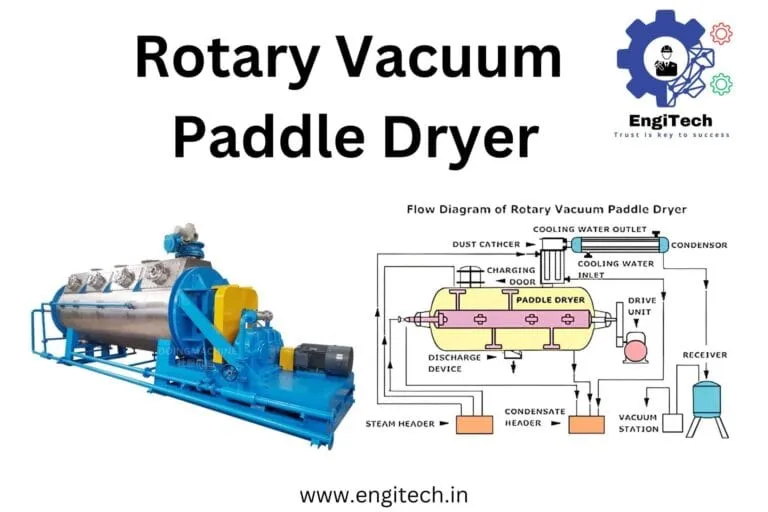 Industrial DryersRotary Vacuum Paddle Dryers (RVPD): Solvent Recovery, Heat Transfer & Sizing Guide
 Industrial DryersHot Air Generation for Dryers: Direct-Fired, Indirect and Electric Compared