

On this page
- Start with the material, not the machine
- Choosing a conveyor
- Worked example: sizing a screw conveyor
- Storage: why hoppers block
- Feeders and transfer points
- Dust, safety and housekeeping
- What I hear from plant owners
- A short selection checklist
- Go deeper: the full guide series
- Frequently asked questions
- What is the difference between loose and packed bulk density?
- Which conveyor is cheapest to run?
- Why does my screw conveyor jam?
- How big should a hopper outlet be?
- Do I need explosion protection for every powder?
- Sources and further reading
- Related guides
- More on Plant Maintenance and Reliability
Short answer: choose a bulk solids handling system by the material first and the machine second. Bulk density, particle size, moisture, abrasiveness, stickiness and how easily the material flows decide which conveyor, feeder and storage bin will work. The same 20 tonnes an hour can run for years on one system and block daily on another.
Most of my work is visiting plants that make or process powders, granules and lumps: food ingredients, chemicals, minerals, fertiliser, plastics. When I sit with an owner or a production head and ask where their biggest daily headache is, the answer is very often “the material does not flow”. Bridging in a hopper, a screw that jams, a bucket elevator that chokes. In almost every case the equipment was bought on capacity and price, and nobody tested the material.
Start with the material, not the machine
Write down these properties before you talk to any supplier. If you do not know them, send a sample to a testing lab or to the supplier.
| Property | Why it matters |
|---|---|
| Bulk density (loose and packed) | Converts tonnes per hour into volume per hour, which is what conveyors and bins actually carry |
| Particle size and distribution | Fines cause dust and packing; lumps block small outlets and chutes |
| Moisture content | A few percent more moisture can turn a free-flowing powder into a cohesive one |
| Angle of repose | A rough guide to flowability and to how steep chutes and hoppers must be |
| Abrasiveness | Decides liners, screw materials and belt cover grade |
| Temperature | Affects belt type, seals, and whether the product softens or sets |
| Hygroscopic, sticky or caking behaviour | Changes storage time limits and the need for vibration, aeration or heated surfaces |
| Dust explosivity and toxicity | Brings in explosion protection, containment and venting requirements |
Choosing a conveyor
| Conveyor | Good for | Watch out for |
|---|---|---|
| Belt conveyor | Long distances, high capacity, lumps and granules; see our belt conveyor guide | Dust at transfer points, limited incline for loose material |
| Screw conveyor | Short runs, enclosed dusty powders, metering | Wear with abrasive material, jamming with sticky or fibrous product, power rises sharply when overfilled |
| Bucket elevator | Vertical lift of free-flowing material; see bucket elevator capacity | Fragile products, sticky material, belt or chain stretch |
| Pneumatic conveying | Routing flexibility, enclosed transfer to several points; see pneumatic conveying design | High energy use, product breakage, wear on bends |
| Vibrating conveyor or feeder | Hot, abrasive or fragile material, controlled feeding | Limited length, noise, structural loads |
Worked example: sizing a screw conveyor
You need 20 tonnes an hour of a powder with bulk density 800 kg/m³. That is 20,000 / 800 = 25 m³ an hour.
Volume per revolution of a screw = π/4 × (D² − d²) × P × fill factor, where D is screw diameter, d is shaft diameter and P is pitch. For a 400 mm screw with a 100 mm shaft, 400 mm pitch and a 30% fill (a normal figure for free-flowing material):
π/4 × (0.16 − 0.01) × 0.4 × 0.30 = 0.0141 m³ per revolution.
At 30 rpm that is 0.0141 × 30 × 60 = 25.4 m³ an hour. So a 400 mm screw at about 30 rpm does the job on a level run (check it with the screw conveyor capacity calculator). A 250 mm screw would need roughly 120 rpm for the same duty, which is far too fast for wear and power. Inclined screws carry less, so reduce the figure for any incline and confirm with the manufacturer’s tables.
Storage: why hoppers block
Two flow patterns matter. In mass flow, all the material moves when the outlet opens. In funnel flow, only a channel above the outlet moves and the rest sits still. Funnel flow causes the classic problems: rat-holing (a stable empty tube through the material), bridging or arching (material locks across the outlet), and segregation.
- Steeper, smoother hopper walls help cohesive material move.
- A larger outlet is the most reliable cure for arching. Small outlets are the single most common design error I see.
- Vibrators and air cannons treat symptoms. They can also compact some powders and make the blockage worse.
- The proper design method uses measured flow properties of the actual material. The approach goes back to Jenike’s work, and testing labs and many equipment suppliers can run the tests.
Feeders and transfer points
A feeder controls the rate. A conveyor only carries what it is given. Screw, rotary valve, belt and vibratory feeders each suit different materials. Choose them by how well the rate can be held, how they handle fines and lumps, and whether they seal against air. Transfer points deserve as much care as the conveyors themselves: poor chute design causes dust, spillage, wear and blockage.
Dust, safety and housekeeping
Dust is both a health and an explosion risk. Combustible dusts such as grain, sugar, starch, plastics, many chemicals and metal powders can explode in the right concentration with an ignition source. Check the dust explosion characteristics, enclose transfer points, and plan dust extraction early. Our guide to bag filters and the upcoming dust collection design guide cover that side. Applicable standards include NFPA 652 and NFPA 654 (see NFPA) and local factory rules.
See it in 3D
What I hear from plant owners
- “We changed the supplier of raw material and now nothing flows.” A different moisture or particle size is enough.
- “The conveyor was fine when we bought it.” Usually the product line has changed, a new grade has been added, or production has risen well past the original design rate.
- “Can we just add a vibrator?” Sometimes, but the honest answer is to look at outlet size and wall angle first.
- Maintenance teams rarely get the material data sheet. Ask for it to be filed with the machine.
A short selection checklist
- List material properties, including worst-case moisture and the finest and coarsest samples.
- Convert mass rate to volume rate using the loose bulk density.
- Choose the conveyor type from the table, then check route, incline and number of discharge points.
- Design storage for mass flow where the material is cohesive.
- Decide on dust control and explosion protection before layout is final.
- Ask for a trial or a reference plant handling a similar material.
- Put the material data in the RFQ. The RFQ builder helps you do that.
Go deeper: the full guide series
These guides take each part of a bulk solids line, from conveyors and feeders to silos and safety, and work it through with numbers.
- Belt Conveyor Problems: Mistracking, Slip and Spillage
- Idler Selection and Spacing
- Belt Cleaners and Skirting: Stopping Carryback and Spillage
- Screw Conveyor Troubleshooting
- Bucket Elevator Problems: Belt Slip, Bucket Wear and Overflow
- Rotary Airlock Valves: Leakage, Wear and Selection
- Silo Flow Problems: Arching, Ratholing and Remedies
- Hopper Design: Wall Angles and Outlet Size
- Dilute or Dense Phase Conveying: A Decision Guide
- Vibrating Feeder or Screw Feeder: Which to Use
- Dust Control at Conveyor Transfer Points
- Belt Scales and Load Cells: Accuracy in Practice
- Screening Basics: Mesh, Deck and Efficiency
- Magnetic Separators for Process Lines
- Big Bag Filling and Discharging Stations
- Powder Flowability: Angle of Repose and Simple Tests
- Wear Materials: AR Plate, Ceramic and Polyurethane
- Conveyor Safety: Guarding and Emergency Stops
Free tools for this topic: Screw conveyor capacity calculator · Belt conveyor capacity calculator · all free engineering tools
Frequently asked questions
What is the difference between loose and packed bulk density?
Loose is the density as poured. Packed (or tapped) is after settling or compaction. Use loose density for conveyor volume, and packed density for storage weight and silo loads.
Which conveyor is cheapest to run?
Belt conveyors usually use the least energy per tonne over long distances. Pneumatic systems use the most, but give the most layout freedom.
Why does my screw conveyor jam?
Common causes are overfilling, lumps or foreign objects, wet or sticky product, hanger bearing wear, or a feed that surges. Check the feed rate and fill level first.
How big should a hopper outlet be?
It depends on the cohesiveness of the material and the pressure in the hopper. There is no safe single number. Use measured flow properties or a supplier test.
Do I need explosion protection for every powder?
No, but you need to know. Have the dust tested for explosivity and follow the results and local regulations.
General engineering information. Always follow the equipment manufacturer’s instructions and your plant safety procedures.
Sources and further reading
For standards, data and independent guidance on this topic, see Conveyor Equipment Manufacturers Association (conveyor standards and idler ratings), Jenike & Johanson (bulk solids flow testing and hopper design resources) and The Engineering ToolBox (engineering reference data and calculators). Always check the current edition and your site conditions before applying any figure.
Free tool for this topic
Belt Conveyor Capacity Calculator (ISO 5048)Load cross-section, volumetric and mass capacity of flat and troughed belt conveyors with surcharge angle and incline correction. Plant Maintenance and ReliabilityA Comprehensive Guide to Gearboxes: Types, Functions, and Expert Insights
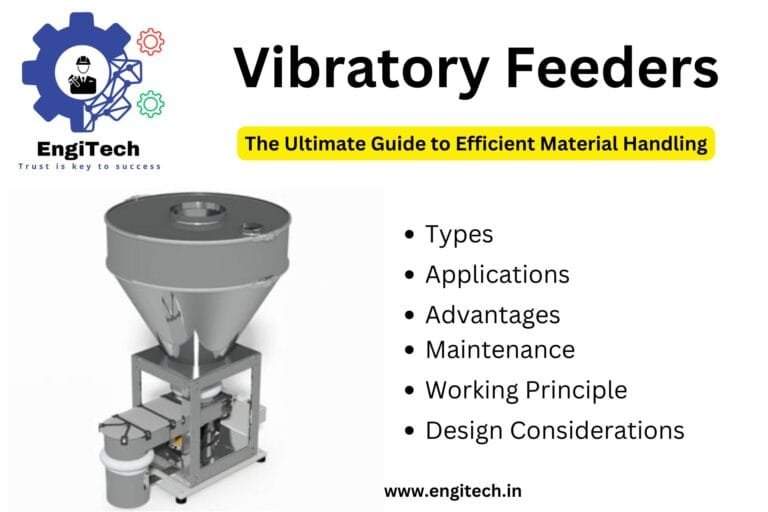 Plant Maintenance and ReliabilityVibratory Feeders: A Comprehensive Guide
 Plant Maintenance and ReliabilityMechanical Seal Failure Analysis: Leakage Troubleshooting & Face Damage Modes
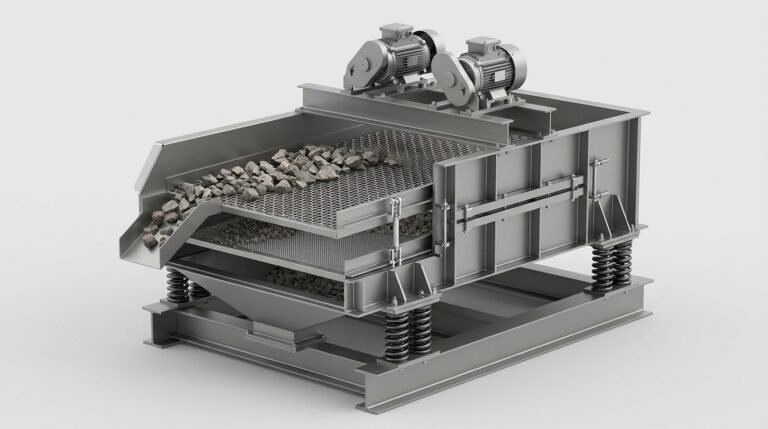 Plant Maintenance and ReliabilityVibrating Screen Sizing: Capacity Calculation Formula, Mesh to Micron & Deck Area Guide
 Plant Maintenance and ReliabilityAPI 682 Mechanical Seal Flush Plans: Plan 11, 23, 52 & 53 Sizing Guide
 Plant Maintenance and ReliabilityLubrication Systems: A Comprehensive Guide