
On this page
- 1. Statutory Scope: Who May Install and Service Boilers
- 2. Boiler Installation: What Plant Teams Must Prepare
- 3. Daily & Weekly Non-Invasive Checks for Plant Operators
- 4. Preparing for Statutory Inspection & AMC Contracts
- 5. Typical Drivers of Installation & AMC Cost
- Recommended Engineering Guides & Tools
- Sources and further reading
- More on Boilers, Chillers and Thermal
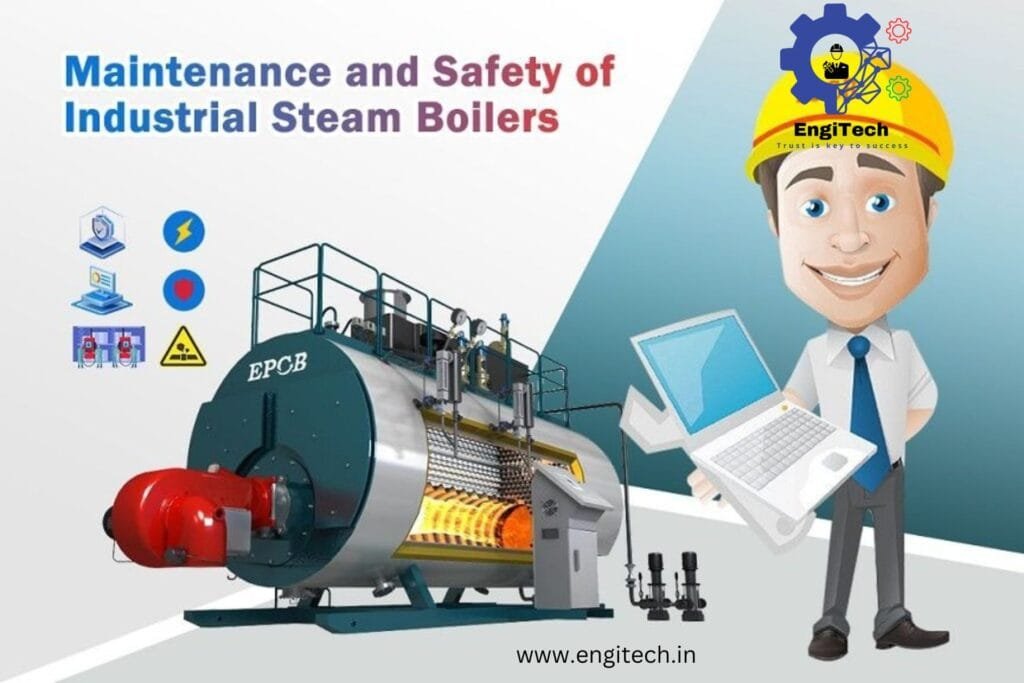
Industrial and commercial steam and hot-water boilers operate under high thermal and pressure energy, where an unapproved modification or poorly tuned fuel train can lead to furnace explosions, pressure-part rupture, or carbon monoxide exposure. For that reason, industrial and commercial boiler installation, commissioning, burner tuning, and pressure-part servicing must be executed by licensed boiler engineers, certified erectors, and authorized burner technicians under applicable statutory inspection regimes—specifically the Indian Boiler Regulations (IBR) in India and ASME BPVC Section I, ASME CSD-1, and NFPA 85 internationally.
This guide explains the regulatory boundaries, what plant managers and reliability engineers should prepare ahead of statutory inspections and Annual Maintenance Contracts (AMCs), and which non-invasive operational checks plant teams should track daily without opening gas trains or pressure boundaries.
1. Statutory Scope: Who May Install and Service Boilers
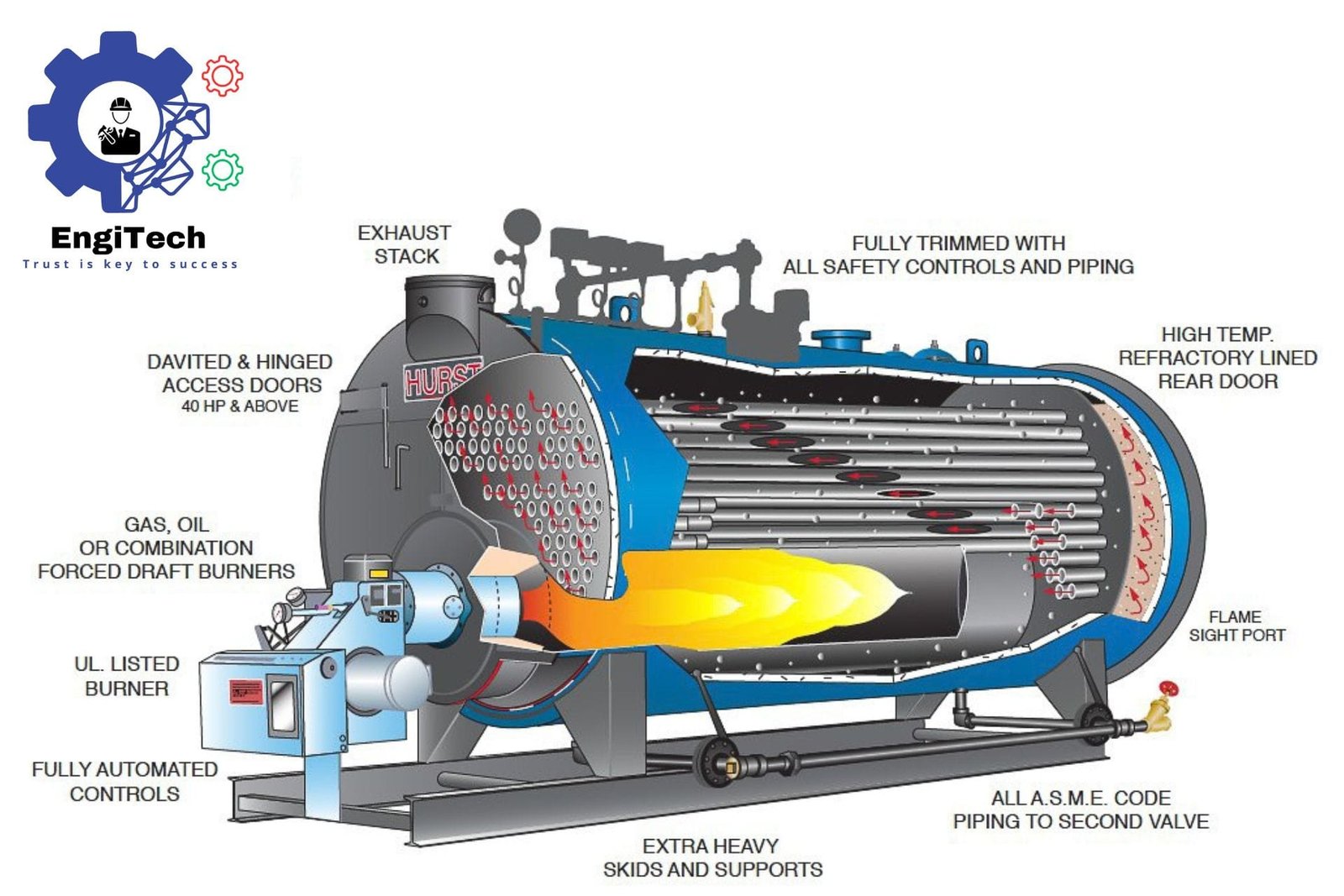
Unlike routine balance-of-plant utilities, boilers combine fired combustion equipment with pressurized water and steam drums. Statutory codes strictly separate routine plant operation from regulated erection and repair work:
- Pressure-part erection, welding, and repair: Must be carried out by IBR-approved boiler erectors/repairers (in India under Form III/Form IV supervision) or ASME “S” / “PP” / National Board “R” stamp holders internationally, with qualified welders (WPS/PQR) and Inspector witness points.
- Gas, LPG, and oil burner commissioning & combustion tuning: Fuel train pressure regulation, air-fuel ratio curves, flame-safeguard timing, and Burner Management System (BMS) interlock verification require OEM-certified combustion engineers or licensed gas/LPG technicians compliant with NFPA 85 / ASME CSD-1 / EN 676.
- Electric & electrode boilers: High-amperage heater banks, SCR/contactor switchgear, insulation resistance testing, and earth-fault protection must be serviced by licensed industrial electricians under lockout/tagout (LOTO) and applicable electrical safety codes.
- Safety relief valves: Pop-test lifting pressure calibration, reseating, and lead-sealing must be done by certified valve test facilities or under statutory boiler inspector supervision—plant staff must never adjust spring tension or gag safety valves during operation.
2. Boiler Installation: What Plant Teams Must Prepare
Before an approved erector sets the boiler on its foundation, plant engineering teams save weeks of commissioning delay by finalizing the utility, civil, and regulatory package upfront:
- Verify steam demand, pressure, and turndown profile: Map peak, average, and minimum process loads (including condensate return temperature and flash losses) so the burner turndown ratio matches low-load shifts without short-cycling.
- Complete statutory drawings and site clearances: Submit boiler room layout, chimney height/emission dispersion data, and IBR or local authority installation approvals before civil foundations or piping headers are welded.
- Design feedwater treatment and blowdown systems: Pair softeners, RO, or deaerators with automated TDS surface blowdown and heat recovery; scale and oxygen pitting remain the leading causes of premature tube failure.
- Provide dedicated combustion air and flue routing: Ensure boiler-house ventilation meets burner air demand, gas trains include double block-and-bleed valves with vent lines routed safely outdoors, and stack sampling ports meet environmental board norms.
- Witness hydro-testing and safety interlock commissioning: During handover, plant engineers should witness the cold hydrostatic test, low-water cutoff (LWCO) trip tests, high-steam pressure cutoffs, flame failure shutdown timing, and combustion flue-gas analyzer printouts across firing rates.
3. Daily & Weekly Non-Invasive Checks for Plant Operators
While licensed specialists handle internal servicing and burner adjustments, certified boiler operators and shift engineers should log non-invasive condition indicators every shift:
See it in 3D
- Water-level gauge glass & LWCO blowdown: Perform shift-wise gauge glass blowdown per OEM procedure to verify clear meniscus response and confirm primary/secondary low-water cutoffs are unobstructed.
- Feedwater & boiler water chemistry: Track hardness (<1–2 ppm as CaCO₃ for fire-tube units), pH, sulfite/oxygen scavenger residual, and drum TDS conductivity so scale or carryover is caught early.
- Stack gas temperature & ΔP drift: A steady 15–25 °C rise in flue gas temperature at constant firing rate signals soot fouling on the fireside or scale buildup on the waterside.
- External visual inspection: Check flange gaskets, sight-glass packings, steam traps, condensate pumps, and refractory casing hotspots using a non-contact IR thermometer without disturbing sealed safety controls.
4. Preparing for Statutory Inspection & AMC Contracts
Annual statutory boiler renewal and preventive AMC visits go smoothly when the plant team prepares a structured shutdown scope in advance:
- Schedule cooldown and LOTO isolation: Plan controlled depressurization, isolation/blinding of shared steam headers, fuel-train lockout, and confined-space gas-testing permits before the inspection team arrives.
- Open fireside and waterside access for certified inspection: Have OEM-recommended manhole/handhole gaskets on hand so authorized technicians can clean smoke tubes, inspect furnace crowns/tube sheets, and perform ultrasonic thickness (UT) gauging for the statutory inspector.
- Scope combustion & safety interlock calibration in the AMC: Require full flue-gas O₂, CO, NOx, and stack-temperature tuning across low-to-high fire, UV/ionization flame scanner sensitivity checks, and witnessed calibration certificates for pressure gauges and safety relief valves.
- Maintain a complete boiler history dossier: Keep IBR / ASME data reports, weld repair logs, water-chemistry trends, safety-valve test certificates, and burner tuning sheets organized for insurance underwriters and statutory inspectors.
5. Typical Drivers of Installation & AMC Cost
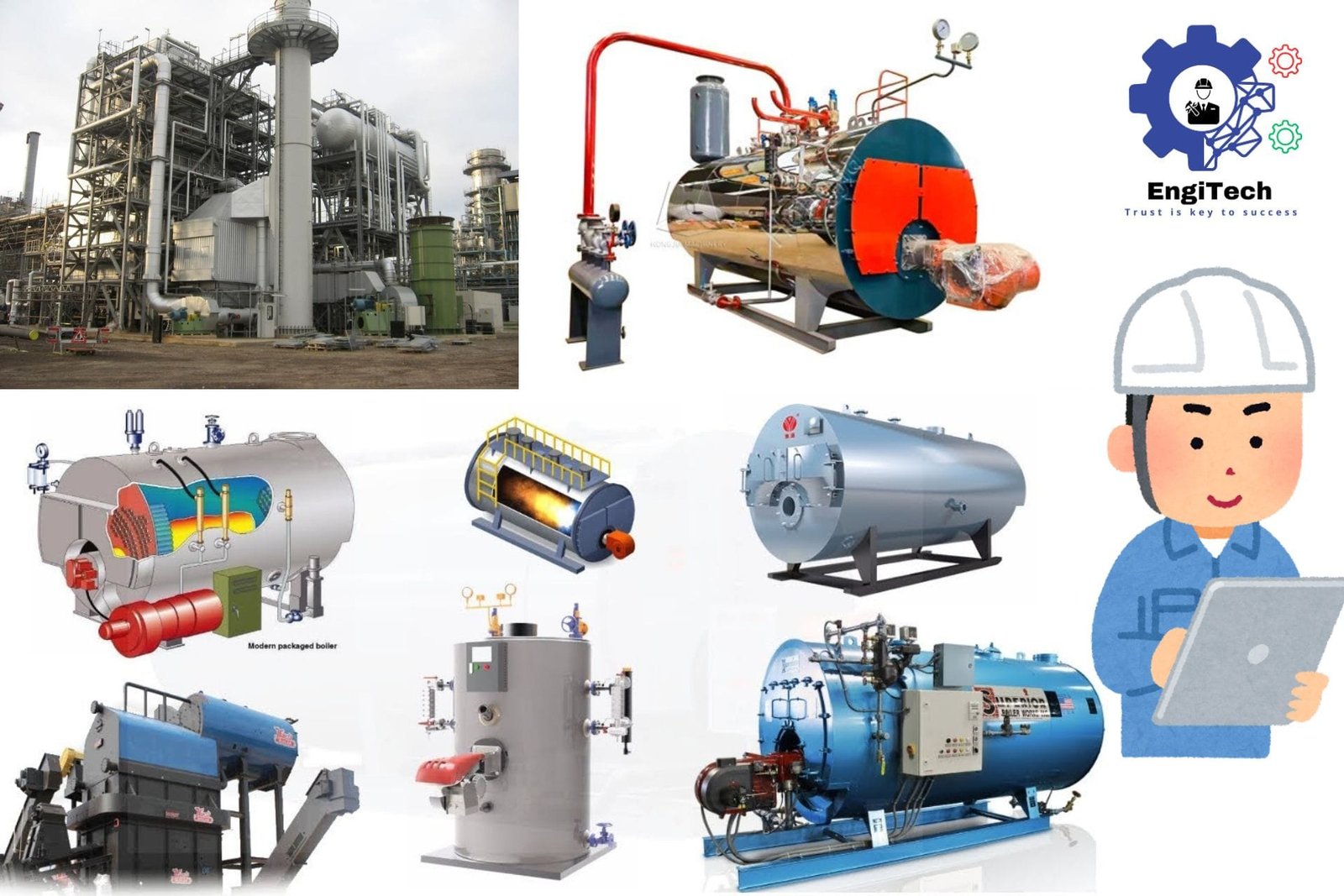
When comparing quotes from licensed boiler erectors and service contractors, budget variations usually stem from scope rather than hourly rates: steam capacity (TPH or BHP) and design pressure class, fuel type (natural gas, LPG, light/heavy oil, biomass, or electric), economizer/air-preheater inclusion, emission controls (low-NOx burners, baghouse/cyclone scrubbers for solid fuels), and whether feedwater softening, RO, and condensate-return piping are bundled into the contract.
Recommended Engineering Guides & Tools
Related reading: Expert Guide to Industrial Boilers: Electric and Steam Systems.
Free tools for this topic: Boiler efficiency & fuel calculator · Steam consumption calculator · all free engineering tools
Sources and further reading
For statutory boiler codes and efficiency standards, refer to the ASME Boiler & Pressure Vessel Code (Section I & CSD-1), NFPA 85 (Boiler and Combustion Systems Hazards Code), Indian Boiler Regulations (IBR / DPIIT), and the US Department of Energy process heating resources. Always verify current editions and local statutory requirements before work begins.
Free tool for this topic
Heat Exchanger LMTD & Area CalculatorHeat duty, log mean temperature difference and required heat-transfer area for counter-flow and parallel-flow exchangers.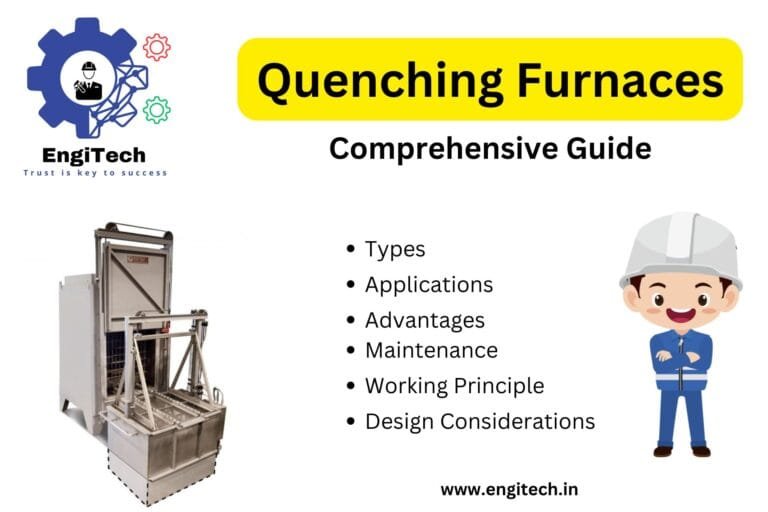 Boilers, Chillers and ThermalQuenching Furnaces: Working Principle, Specs & Selection
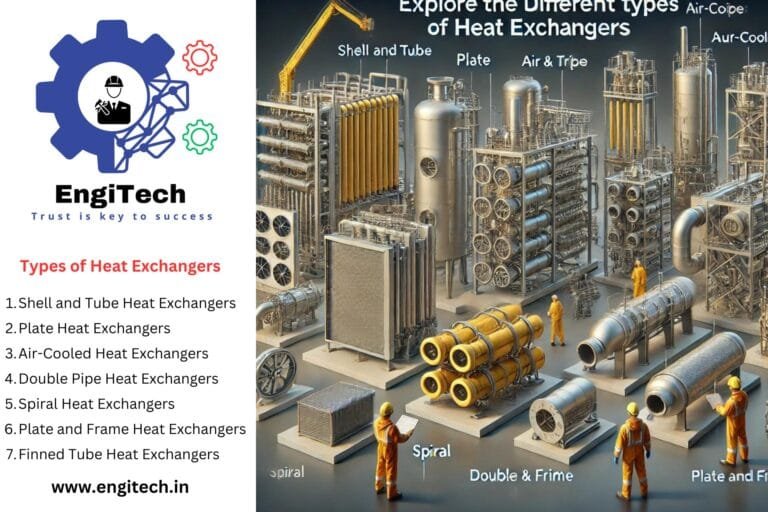 Boilers, Chillers and ThermalExplore the Different Types of Heat Exchangers: Guide | EngiTech
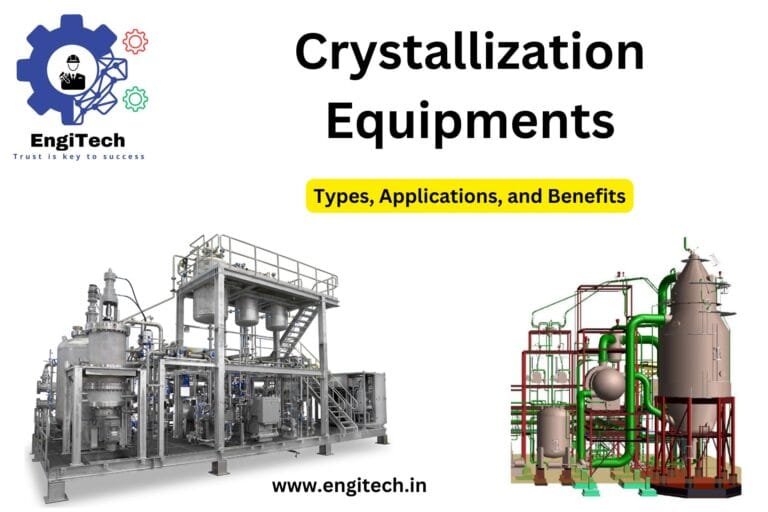 Boilers, Chillers and ThermalIndustrial Crystallization Equipment: DTB, Oslo & Cooling Types
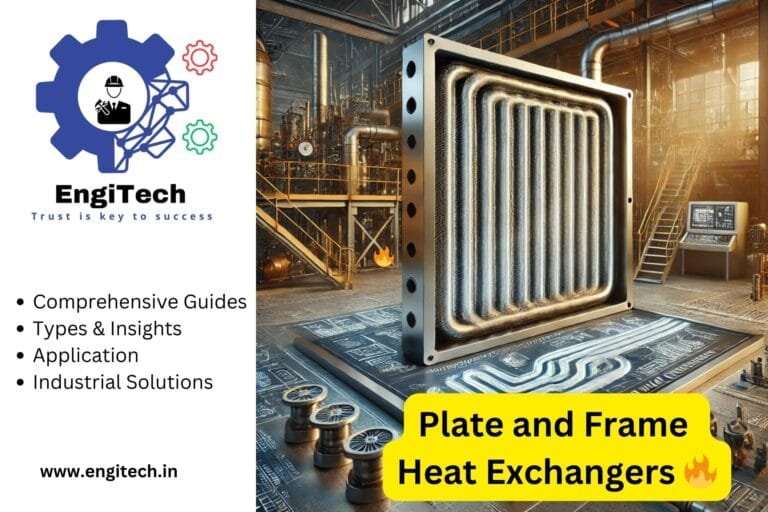 Boilers, Chillers and ThermalPlate and Frame Heat Exchangers: Maximize Efficiency and Performance
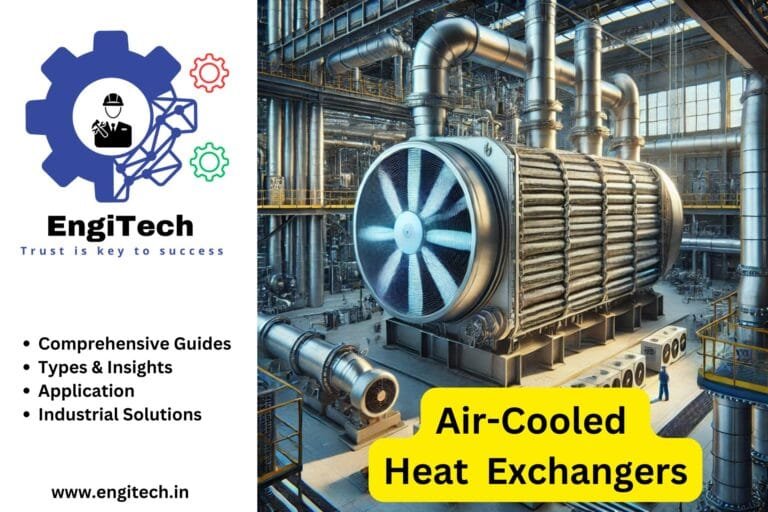 Boilers, Chillers and ThermalExpert Guide to Air-Cooled Heat Exchangers: Maximize Efficiency & Performance: Working Principle, Specs & Selection
 Boilers, Chillers and ThermalCooling vs Antisolvent Crystallization: How to Compare the Methods