
On this page
- What is a Climatic Test Chamber?
- Applications of Climatic Test Chambers
- Leading Climate Chamber Manufacturers
- Key Features and Technologies in Climatic Test Chambers
- Considerations When Choosing a Climatic Test Chamber
- Future Trends in Climatic Test Chambers
- Climatic test chamber types and typical specifications
- Choosing a climatic chamber: key checks
- Worked example: the 85 °C / 85% RH test
- Conclusion
- 🛠️ Recommended Engineering Guides & Tools
- More on Environmental Engineering
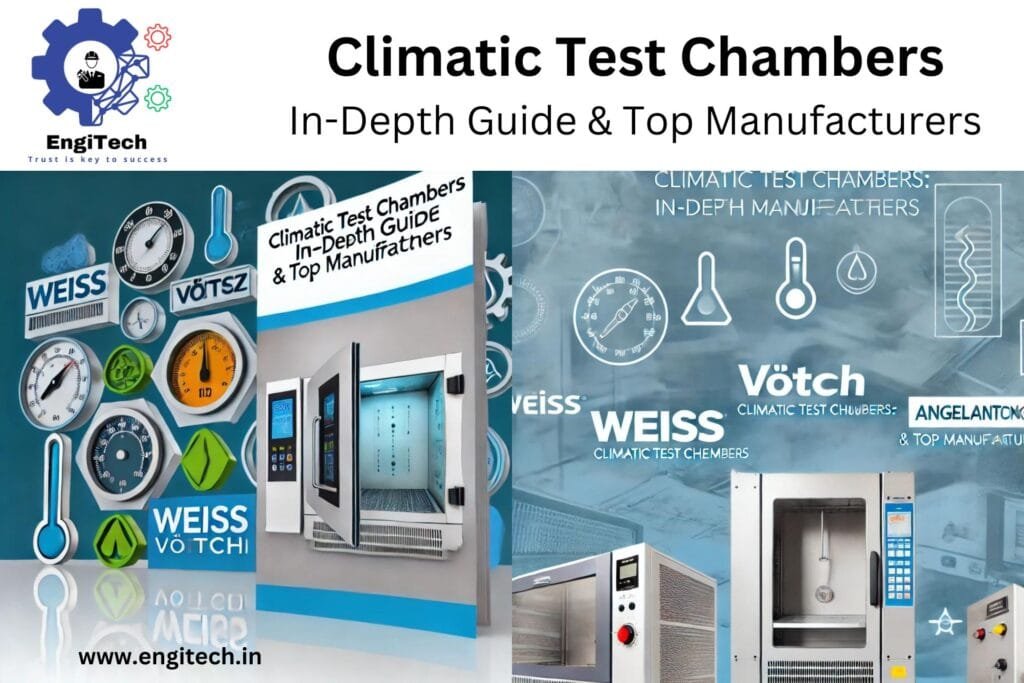
Climatic test chambers, also known as climate control chambers, are essential tools for simulating environmental conditions to test the durability and performance of products under various climatic stresses. These chambers are indispensable in industries such as automotive, aerospace, electronics, and pharmaceuticals, where understanding a product’s behavior in different environments is essential. This guide examines the intricacies of climatic test chambers, exploring their types, applications, and the leading manufacturers in the field, including Weiss, Vötsch, and Angelantoni.
What is a Climatic Test Chamber?
A climatic test chamber is a specialized enclosure designed to replicate a range of environmental conditions such as temperature, humidity, and sometimes pressure or light. These chambers are used to conduct stress tests on products to ensure they can withstand various climatic conditions they might encounter during their lifecycle. By simulating these conditions, manufacturers can identify potential weaknesses in their products, improve design and durability, and ensure compliance with industry standards.
Types of Climatic Test Chambers
- Temperature Chambers: These chambers can simulate a wide range of temperatures, from extreme cold to intense heat. They are essential for testing the thermal stability of electronic components, automotive parts, and other sensitive materials.
- Humidity Chambers: These chambers allow for precise control of humidity levels, making them essential for testing products that are sensitive to moisture. They are commonly used in the electronics, pharmaceuticals, and food industries.
- Thermal Shock Chambers: Designed to test the resistance of materials and products to sudden changes in temperature, thermal shock chambers rapidly transition between hot and cold environments. This is particularly important for products exposed to varying temperatures.
- Combined Climatic Chambers: These chambers can simulate multiple environmental factors simultaneously, such as temperature and humidity. They provide comprehensive testing solutions for products that will encounter complex environmental conditions.
- Altitude Chambers: Used to simulate low-pressure conditions, altitude chambers are essential for testing the performance of aviation equipment and electronics at high altitudes.
Applications of Climatic Test Chambers
Climatic test chambers are used across a wide range of industries for various purposes:
- Automotive: Testing vehicle components for durability under extreme temperatures, humidity, and other environmental conditions.
- Aerospace: Simulating high-altitude and thermal conditions to ensure aircraft components’ reliability and safety.
- Electronics: Ensuring electronic devices can withstand temperature fluctuations and humidity.
- Pharmaceuticals: Stability testing of drugs and medical devices to ensure they maintain their efficacy and safety under different conditions.
- Construction Materials: Testing building materials for durability and performance under various weather conditions.
Leading Climate Chamber Manufacturers
Selecting the right climate chamber manufacturer is essential for obtaining reliable and high-quality equipment. Here are some of the leading manufacturers in the field:
1. Weiss Technik
Weiss Technik is a global leader in the manufacture of environmental simulation systems. Their range of climatic test chambers includes temperature chambers, humidity chambers, thermal shock chambers, and combined climatic chambers. Weiss Technik is known for its advanced technology, precision, and commitment to quality. Their products are widely used in industries such as automotive, aerospace, and electronics.
Weiss climatic chambers are designed to meet the highest standards of accuracy and reliability, making them a preferred choice for demanding testing requirements. The company’s extensive product range and innovative solutions ensure that they can cater to various industry needs.
2. Vötsch Industrietechnik (Vötsch)
Vötsch, a subsidiary of Weiss Technik, specializes in environmental testing equipment and systems. Vötsch offers a comprehensive range of climatic chambers, including temperature and humidity chambers, thermal shock chambers, and special solutions for specific applications. Vötsch climatic chambers are renowned for their precision, reliability, and innovative design.
Vötsch’s products are used in various industries, including automotive, aerospace, electronics, and materials science. The company’s commitment to innovation and quality ensures that their climatic chambers provide accurate and reliable testing results.
3. Angelantoni Test Technologies (ATT)
Angelantoni Test Technologies is a leading manufacturer of environmental test chambers, including climatic test chambers, thermal shock chambers, and combined climatic chambers. ATT’s products are known for their advanced technology, robust construction, and user-friendly design.
Angelantoni climatic chambers are used in a wide range of industries, including automotive, aerospace, electronics, and pharmaceuticals. The company’s focus on innovation and customer satisfaction ensures that their products meet the highest standards of performance and reliability.
Key Features and Technologies in Climatic Test Chambers
Modern climatic test chambers incorporate advanced technologies and features to provide precise and reliable testing:
- Programmable Controllers: Most chambers are equipped with programmable controllers that allow for the precise setting and monitoring of environmental conditions. These controllers can automate test sequences, ensuring consistency and accuracy.
- Data Logging and Analysis: Advanced climatic chambers include data logging capabilities, allowing users to record and analyze test data. This feature is essential for quality control, research, and compliance with regulatory standards.
- Energy Efficiency: Many manufacturers focus on creating energy-efficient chambers to reduce operational costs and environmental impact. Features such as energy-saving modes and efficient cooling systems are common in modern chambers.
- Safety Features: Safety is a critical consideration in the design of climatic test chambers. Features such as over-temperature protection, emergency shutoff, and alarms are standard to ensure safe operation.
- Customizable Solutions: Manufacturers often offer customizable solutions to meet specific testing requirements. This can include chambers with special dimensions, additional features, or unique environmental simulation capabilities.
Considerations When Choosing a Climatic Test Chamber
When selecting a climatic test chamber, consider the following factors to ensure it meets your specific testing needs:
- Type of Testing: Identify the specific environmental conditions you need to simulate, such as temperature, humidity, or altitude. This will determine the type of chamber you require.
- Size and Capacity: Choose a chamber size that accommodates your test specimens and any additional equipment needed for testing.
- Control and Monitoring: Look for chambers with precise control and monitoring features, such as programmable controllers, data logging, and remote monitoring capabilities.
- Quality and Reliability: Consider manufacturers known for producing high-quality, reliable equipment. Check for certifications and compliance with industry standards.
- Budget and Operational Costs: While high-quality chambers can be expensive, consider the long-term benefits of investing in reliable equipment. Also, factor in operational costs such as energy consumption and maintenance.
- Customer Support and Service: Ensure the manufacturer offers reliable customer support, including installation, training, maintenance, and after-sales service.
Future Trends in Climatic Test Chambers
The field of climatic test chambers continues to evolve with advancements in technology and increasing demands for accurate and efficient testing solutions. Some emerging trends include:
- Automation and IoT Integration: The integration of automation and Internet of Things (IoT) technologies is enhancing the functionality of climatic test chambers. Automated systems allow for remote monitoring and control, reducing the need for manual intervention. IoT-enabled chambers can provide real-time data and analytics, improving the accuracy and efficiency of testing processes.
- Energy Efficiency and Sustainability: With growing concerns about energy consumption and environmental impact, manufacturers are focusing on developing energy-efficient and eco-friendly chambers. Innovations include the use of sustainable materials, energy-efficient cooling systems, and renewable energy sources.
- Customization and Flexibility: As industries face increasingly complex testing requirements, there is a growing demand for customizable and flexible test chambers. Manufacturers are offering modular designs and tailored solutions that can be adapted to specific testing needs.
- Advanced Control Systems: Modern climatic test chambers are equipped with advanced control systems that offer precise and stable environmental conditions. These systems include digital controllers, touchscreen interfaces, and sophisticated software for data management and analysis.
- Regulatory Compliance: As regulatory standards become more stringent, there is a greater emphasis on ensuring that test chambers meet international standards and certifications. This ensures that products tested in these chambers comply with safety and quality regulations.
Climatic test chamber types and typical specifications
| Chamber type | Typical range | Used for |
|---|---|---|
| Temperature chamber | About −70 to +180 °C | Cold start, dry heat, burn-in |
| Temperature and humidity chamber | About 10 to 98% RH between roughly +10 and +95 °C | Damp heat, condensation and humidity cycling |
| Rapid-rate (stress screening) chamber | Ramp rates of 10 to 20 K/min or more | Electronics screening, fast thermal cycling |
| Thermal shock chamber | Two or three zones; samples moved in seconds | Solder joints, materials with different expansion |
| Walk-in climatic room | Similar ranges, very large volume | Vehicles, batteries, pharma stability storage |
Choosing a climatic chamber: key checks
- Temperature and humidity range you need now, plus margin for future tests.
- Ramp rate measured with your real load, not empty.
- Uniformity and stability across the workspace, and the calibration certificate.
- Heat load from powered test samples, and water quality for the humidifier.
- Safety options for battery testing: gas detection, pressure relief, fire suppression.
Worked example: the 85 °C / 85% RH test
A common reliability test for electronics holds parts at 85 °C and 85% RH for 1,000 hours. Using the Magnus approximation, that air has a dew point of about 81.0 °C. Any surface in the chamber cooler than that will collect condensation, so chamber walls, cable ports and sample fixtures must stay warm, and the chamber must reach humidity only after the samples are up to temperature. For test standards see environmental test chambers; for light-ageing tests see xenon arc test chambers.
Conclusion
Climatic test chambers are indispensable tools for ensuring the quality, reliability, and durability of products across various industries. By simulating a wide range of environmental conditions, these chambers help manufacturers identify potential issues and ensure that their products meet the highest standards of performance and safety.
For potential buyers and industry professionals, understanding the different types of climatic test chambers, their applications, and the leading manufacturers is essential. This knowledge helps in making informed decisions when selecting the right chamber for specific testing needs. The top manufacturers, including Weiss Technik, Vötsch, and Angelantoni Test Technologies, offer a wide range of high-quality products tailored to various industries.
For more detailed information on climatic test chambers and to explore specific products, you can visit the manufacturers’ websites:
This comprehensive guide provides a thorough understanding of climatic test chambers and is designed to assist buyers and industry professionals in making well-informed decisions for their testing requirements.
Most Asked FAQs for Climatic Test Chambers
1. What is a climatic test chamber?
A climatic test chamber is a controlled environment used to simulate various climatic conditions such as temperature, humidity, and altitude. It helps test the durability and performance of products under these conditions.
2. What industries use climatic test chambers?
Climatic test chambers are widely used in industries like automotive, aerospace, electronics, pharmaceuticals, and construction materials.
3. How does a temperature chamber differ from a humidity chamber?
A temperature chamber simulates extreme temperatures to test a product’s thermal stability, while a humidity chamber controls both temperature and humidity levels to assess moisture sensitivity.
4. What are thermal shock chambers used for?
Thermal shock chambers are used to test a product’s resistance to rapid temperature changes, ensuring it can withstand sudden thermal stress.
5. Why are altitude chambers important?
Altitude chambers simulate low-pressure conditions to test the performance of products at high altitudes, essential for aviation and electronics.
6. What factors should I consider when choosing a climatic test chamber?
Consider the type of testing, chamber size, control and monitoring features, quality and reliability, energy efficiency, and budget.
7. What are the key features of modern climatic test chambers?
Key features include programmable controllers, data logging, advanced safety features, energy efficiency, and customizable options.
8. Can climatic test chambers simulate multiple conditions simultaneously?
Yes, combined climatic chambers can simulate multiple conditions, such as temperature and humidity, for comprehensive testing.
9. What are some leading manufacturers of climatic test chambers?
Top manufacturers include Weiss Technik, Vötsch Industrietechnik, and Angelantoni Test Technologies.
10. What advancements are being made in climatic test chambers?
Recent advancements include automation, IoT integration, energy-efficient designs, and advanced control systems.
These FAQs cover a wide range of common questions and concerns related to climatic test chambers, helping readers understand their uses, features, and considerations for selection.
As you examine the world of climatic test chambers and explore the offerings from top manufacturers, it’s clear that selecting the right equipment is essential for ensuring product reliability and compliance. At EngiTech.in, we are committed to providing comprehensive insights and the latest information on all types of engineering related products and technologies helping you make informed decisions. Our platform is designed to guide potential buyers and industry professionals through the complexities of choosing the right product to their specific needs. Whether you are looking for temperature chambers, humidity chambers, or advanced combined climatic chambers, we offer detailed resources and expert advice. Explore EngiTech.in to stay ahead in your industry with the latest innovations and updates in environmental testing solutions.
🛠️ Recommended Engineering Guides & Tools
Related reading: The Leading Spray Dryer Manufacturer: Innovation and Quality; Environmental Test Chambers: A Comprehensive Guide for Buyers.
Free tools for this topic: Engineering unit converter · Engineering reference tables · Engineering glossary · all free engineering tools
Free tool for this topic
Motor Running Cost & Energy CalculatorElectrical input power, annual energy use and running cost of a motor from its rating, load, efficiency and operating hours. Environmental EngineeringIndustrial Environmental Compliance: CPCB/EPA Emission Limits & Audit Checklist
 Environmental EngineeringZero Liquid Discharge (ZLD) Systems: MVR Evaporators, Crystallizers & RO Recovery
 Environmental EngineeringThe Ultimate Guide to Sewage Treatment Plants: Processes, Technologies, and Future Trends
 Environmental EngineeringHydropower & Tidal Turbines: Francis vs Pelton vs Kaplan Head & Flow Selection
 Environmental EngineeringIndustrial Biofuel Production: Transesterification Math, Biodiesel ASTM D6751 & Bioethanol
 Environmental EngineeringEnvironmental Test Chambers: A Comprehensive Guide for Buyers