


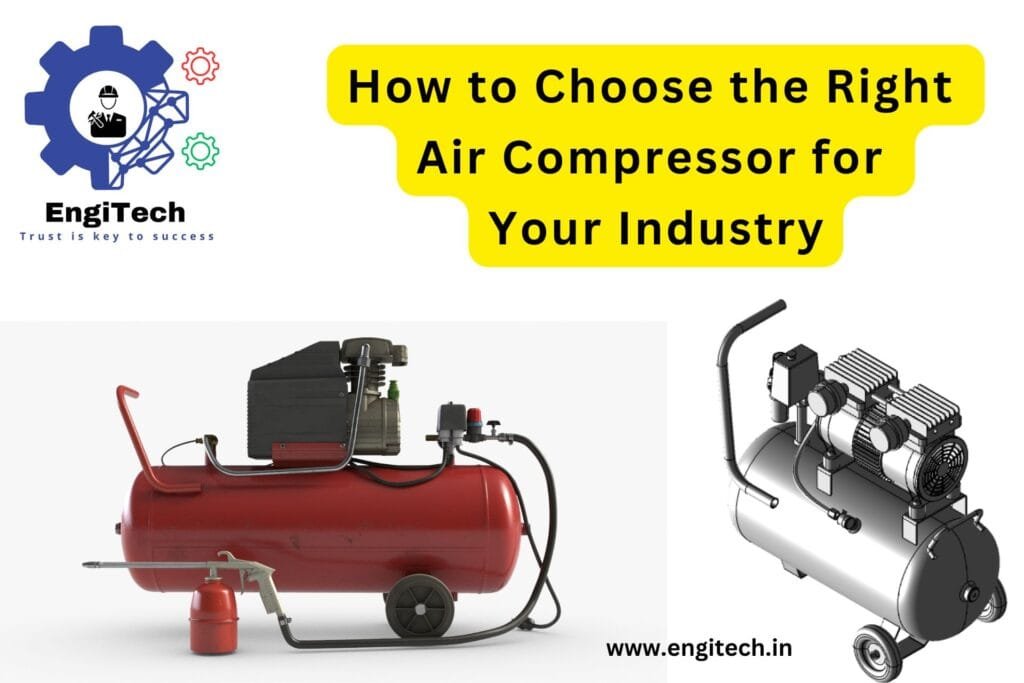
Selecting the right air compressor for your industry is a crucial decision that impacts productivity, cost-efficiency, and operational performance. With various types, sizes, and specifications available, finding the perfect fit can seem overwhelming.
This blog will guide you through the critical factors to consider when choosing an air compressor, tailored for your industry’s specific needs. From understanding compressor types to analyzing power requirements, we’ll equip you with the knowledge to make an informed choice.
Table of Contents
Why Choosing the Right Air Compressor Matters
The right air compressor ensures:
- Optimal Performance: Enhances productivity by meeting task-specific demands.
- Cost-Efficiency: Saves on energy consumption and maintenance costs.
- Longevity: Reduces wear and tear, extending the compressor’s lifespan.
1. Understand Your Industry Needs
Different industries require air compressors for specific applications. Understanding these needs is the first step toward making the right choice.
Common Industrial Uses of Air Compressors
- Manufacturing: Powering pneumatic tools, material handling, and packaging.
- Healthcare: Supporting ventilators, dental tools, and sterilization processes.
- Construction: Operating jackhammers, drills, and nail guns.
- Food and Beverage: Packaging, bottling, and food processing.
Pro Tip:
Create a list of tasks your compressor will handle to identify the necessary specifications.
2. Types of Air Compressors
1. Reciprocating (Piston) Compressors
- Best For: Small-scale operations like workshops or construction sites.
- Advantages: High-pressure output, compact, cost-effective.
- Disadvantages: Limited to intermittent use due to heat generation.
2. Rotary Screw Compressors
- Best For: Continuous, high-demand operations like manufacturing plants.
- Advantages: Quiet, efficient, long-lasting.
- Disadvantages: Higher initial cost.
3. Centrifugal Compressors
- Best For: Large-scale industries requiring constant high-volume airflow.
- Advantages: High capacity, energy-efficient.
- Disadvantages: Expensive and complex maintenance.
4. Scroll Compressors
- Best For: Precision applications like healthcare and electronics.
- Advantages: Quiet, oil-free, low maintenance.
- Disadvantages: Limited capacity compared to other types.
3. Assess Power Requirements
The two critical factors to consider here are:
1. CFM (Cubic Feet per Minute)
- Determines the volume of air the compressor delivers.
- Match the CFM to the requirements of your tools and equipment.
2. PSI (Pounds per Square Inch)
- Indicates the air pressure the compressor can deliver.
- Ensure the PSI meets the needs of your most demanding tools.
Pro Tip:
Always choose a compressor with a slightly higher CFM and PSI than your tools require to accommodate future expansions.
4. Energy Efficiency
Energy costs are a significant factor in air compressor operations, especially for industries with continuous usage.
Energy-Saving Tips:
- Variable Speed Drives (VSD): Adjust motor speed based on demand, reducing energy waste.
- Proper Sizing: Oversized compressors consume unnecessary energy. Choose a size that fits your needs.
- Regular Maintenance: Clean filters and check for leaks to optimize performance.
5. Oil-Free vs. Oil-Lubricated Compressors
Oil-Free Compressors
- Best For: Food, beverage, healthcare, and electronics industries where air purity is crucial.
- Advantages: No risk of contamination, low maintenance.
- Disadvantages: Higher upfront cost.
Oil-Lubricated Compressors
- Best For: Heavy-duty applications like manufacturing and construction.
- Advantages: Durable, handles high pressure.
- Disadvantages: Requires regular oil changes and maintenance.
Pro Tip:
If hygiene and air purity are critical, always opt for oil-free compressors.
6. Consider Portability and Space
Portable Compressors
- Ideal for industries like construction and agriculture.
- Compact and easy to move around work sites.
Stationary Compressors
- Best for manufacturing plants and other permanent installations.
- Offer higher capacity and durability.
Space Requirements:
- Assess the available space to ensure your compressor fits comfortably.
- Leave room for ventilation and maintenance access.
7. Noise Levels and Workplace Environment
Noise can be a significant factor, especially in indoor settings or industries like healthcare.
Low-Noise Options:
- Scroll and rotary screw compressors are quieter than reciprocating models.
Noise Reduction Tips:
- Install sound enclosures.
- Choose a compressor with a lower decibel (dB) rating.
- Place the compressor in a soundproofed area.
8. Maintenance and Durability
Regular maintenance ensures your air compressor operates efficiently and lasts longer.
Maintenance Checklist:
- Inspect Filters: Clean or replace clogged filters regularly.
- Check Belts: Ensure belts are in good condition and tensioned correctly.
- Monitor Oil Levels: For oil-lubricated compressors, check and replace oil periodically.
- Leak Detection: Repair air leaks promptly to prevent energy loss.
Pro Tip:
Choose compressors with readily available parts and support for hassle-free maintenance.
9. Budget and Total Cost of Ownership (TCO)
While the initial cost is important, consider the long-term costs as well.
Cost Factors to Consider:
- Initial Purchase Price: High-quality compressors may cost more but offer better value.
- Energy Consumption: Look for energy-efficient models to save on utility bills.
- Maintenance Costs: Consider the cost and frequency of maintenance.
10. Choosing the Right Brand and Supplier
Reputable brands and suppliers ensure you receive a reliable product with excellent after-sales support.
What to Look For:
- Warranty coverage.
- Customer reviews and testimonials.
- Availability of spare parts and technical support.
Popular Air Compressor Brands
Conclusion
Choosing the right air compressor involves understanding your industry’s specific needs, evaluating technical specifications, and balancing cost with performance. By considering the factors outlined in this guide, you can invest in a compressor that enhances efficiency, reduces costs, and supports your business operations effectively.
For more insights and expert guidance on industrial air compressors, explore our comprehensive resources at EngiTech and stay updated with the latest innovations in air compressor technology!